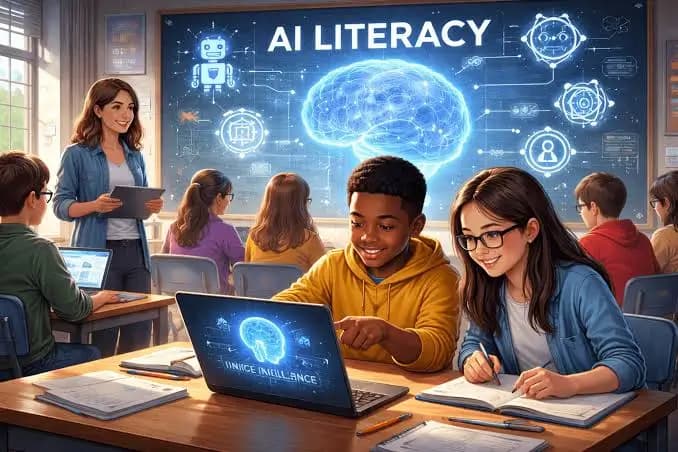
Artificial intelligence has gone from being a futuristic concept to an everyday study companion. Today, millions of students use ChatGPT, Gemini, Claude, and other AI assistants to explain math problems, summarize books, write essays, and prepare for exams.
But there's one problem.
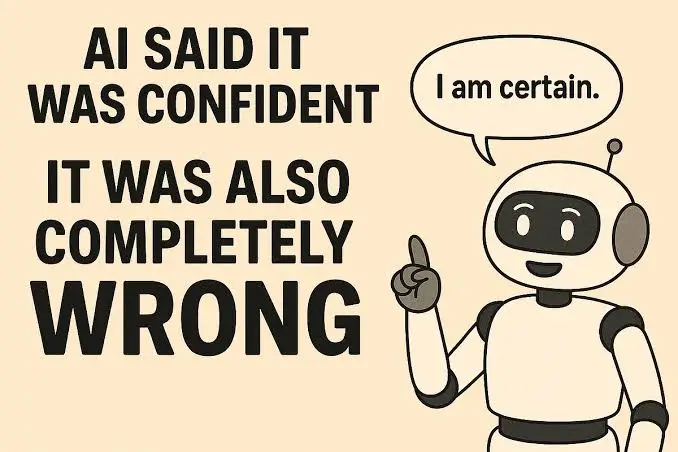
AI sounds confident - even when it's wrong.
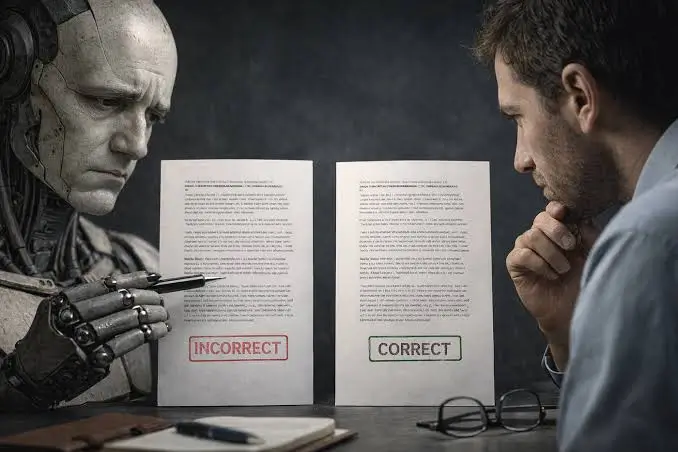
That's why schools around the world are beginning to teach AI literacy: not just how to use AI, but how to question it.
Instead of asking, "How do I use ChatGPT?", educators are now asking a much more important question:
"How do I know when AI is giving me bad information?"
And that's a skill everyone - not just students - needs to learn.
AI Can Be Helpful... and Completely Wrong
Imagine asking an AI chatbot:
"Who won the Nobel Prize in Literature in 2026?"
If the AI doesn't have up-to-date information, it may confidently invent a winner, complete with fake achievements and references.
It doesn't say:
"I'm not sure."
Instead, it often gives an answer that looks believable.
That's called an AI hallucination.
The scary part isn't that AI makes mistakes.
The scary part is that many people don't realize they're mistakes.
Reality Example #1: The Lawyer Who Submitted Fake Court Cases

One of the most famous AI mistakes happened in 2023.
A lawyer used ChatGPT to help prepare a legal brief.
The AI generated several court cases that looked completely legitimate.
There was just one problem.
None of them existed.
The lawyer submitted the document to court without verifying the citations.
The judge later discovered every case had been invented by AI.
The lawyer was sanctioned, and the story made international headlines.
Lesson
AI can generate information that looks professional - even citations and references - but it cannot guarantee they're real.
Always verify important information.
Reality Example #2: Students Turning in Essays With Fake References
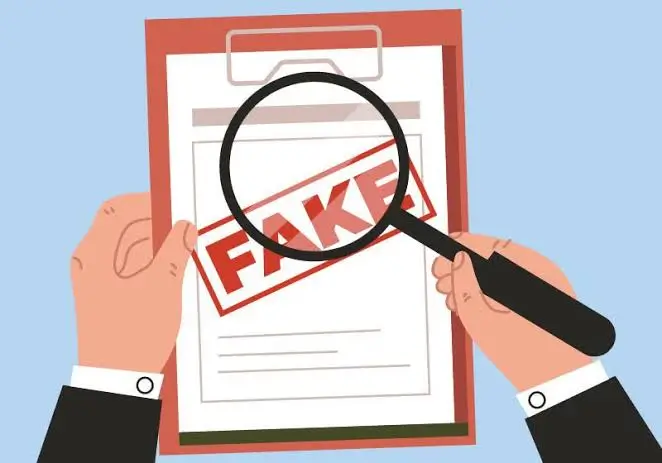
Many teachers now report seeing essays that contain impressive-looking academic references.
Except...
Some of those journals don't exist.
Neither do the authors.
Students often assume:
"If ChatGPT wrote it, it must be true."
Unfortunately, that's not how AI works.
Large language models predict likely words - they don't automatically fact-check every sentence.
Better approach
Use AI to:
- brainstorm ideas
- simplify difficult concepts
- improve grammar
But always verify:
- statistics
- quotations
- research papers
- references
Reality Example #3: AI Image Generators and Geography

During teacher training, educators asked an AI image generator to create a world map.
At first glance, everything looked normal.
Then they noticed:
- country names were misspelled
- borders were incorrect
- one country disappeared entirely
- random text appeared across the map
The image looked realistic.
But it was full of mistakes.
That's exactly why schools are teaching students not to judge information based only on appearance.
Just because something looks convincing doesn't make it accurate.
Reality Example #4: AI Gets Simple Math Wrong
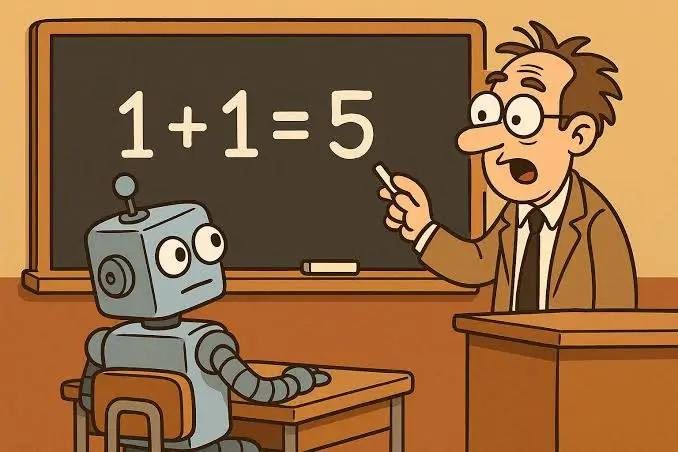
Ask AI:
"Which number is larger: 9.11 or 9.9?"
Surprisingly, some AI models have answered:
9.11
Humans immediately recognize that:
9.90 > 9.11
Why does this happen?
Because language models are trained primarily to predict text - not perform exact mathematical reasoning.
Today's AI is much better than early versions, but mistakes like these still happen in complex calculations.
That's why calculators still exist.
Reality Example #5: AI Invents Product Features
Imagine you're researching a new smartphone.
You ask AI:
"Does this phone support satellite messaging?"
The chatbot confidently replies:
"Yes."
You buy the phone.
Later...
You discover that feature only exists on the Pro model.
AI mixed information from different versions.
This happens surprisingly often with:
- laptops
- cameras
- software
- cars
- AI tools
Always double-check specifications on the manufacturer's website.
Reality Example #6: Deepfakes Are Getting Harder to Spot
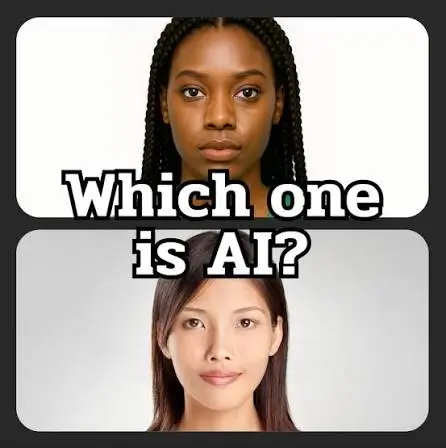
A student receives a video message that appears to show their school principal announcing:
"School is canceled tomorrow."
The voice sounds real.
The face looks real.
The background matches the school.
Except...
The video was generated entirely by AI.
Without AI literacy, many students would believe it immediately.
Schools now teach students to ask:
- Who posted this?
- Is there another source?
- Has the school officially confirmed it?
Those questions are becoming as important as reading itself.
AI Literacy Is More Than Learning Prompts
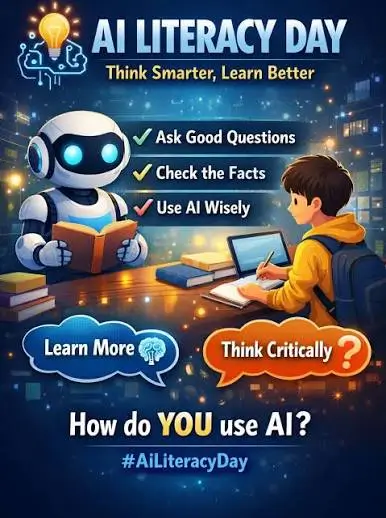
Many people think AI literacy means writing prompts like:
"Act as an expert..."
That's only a tiny part of it.
True AI literacy means understanding:
- what AI knows
- what AI doesn't know
- why hallucinations happen
- how bias affects responses
- how training data shapes answers
- when humans should make the final decision
It's closer to learning critical thinking than learning software.
How Schools Are Teaching AI Literacy
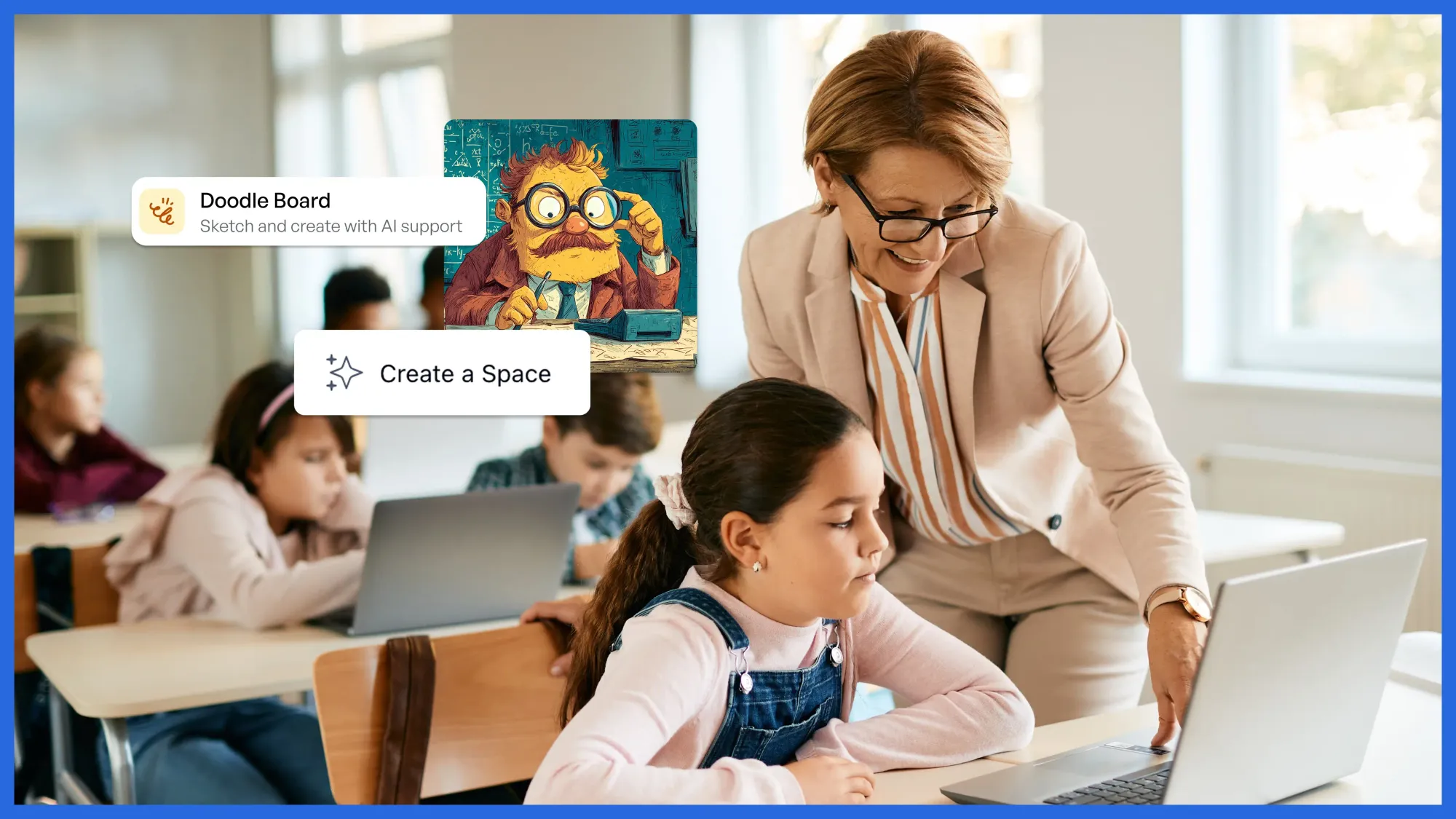
Instead of banning AI, teachers are asking students to challenge it.
For example:
Activity 1
Students ask AI five history questions.
Then they verify every answer using textbooks or trusted websites.
The goal isn't to prove AI wrong.
It's to learn verification.
Activity 2
Students compare answers from ChatGPT, Gemini, and Claude.
They quickly notice that different AI models often provide different explanations.
Which one is correct?
That's where research begins.
Activity 3
Students intentionally try to "trick" AI with misleading or ambiguous questions.
They learn that AI often struggles with:
- sarcasm
- jokes
- missing context
- misleading wording
This helps students understand AI's limitations rather than blindly trusting every response.
The Skill That Will Matter Most
Twenty years ago, schools taught students how to search Google.
Today, search has changed.
Tomorrow's challenge isn't finding information.
It's deciding whether that information deserves to be trusted.
The students who succeed won't be the ones who use AI the most.
They'll be the ones who know when to question it.
Final Thoughts
AI is becoming as common as calculators and search engines. It can save hours of work, explain complex topics, and boost creativity - but it is not a replacement for human judgment.
That's why schools are beginning to teach AI literacy.
The goal isn't to create students who depend on AI.
It's to create students who can work with AI intelligently, recognize its limitations, and think critically before accepting any answer.
In the age of artificial intelligence, the most valuable skill may not be knowing how to ask AI a question.
It may be knowing when not to believe its answer.