What is Mvidia?
Mvidia is a free puzzle game about building a computer chip. A memo from the CEO of the fictional company Mvidia says you were hired as a software engineer but are needed on the hardware side, and hands you a shipment of transistors. From there you build your way up, from transistors to teraflops.
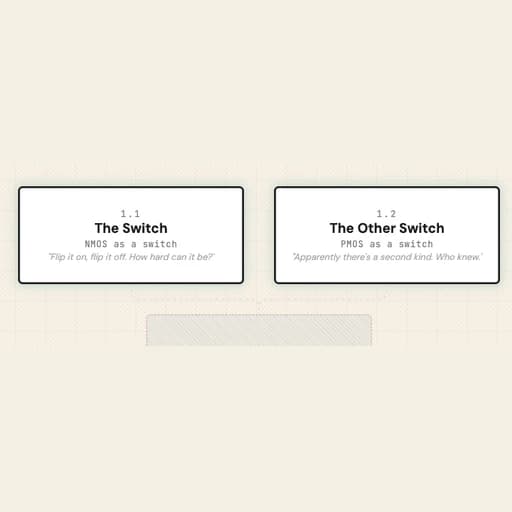
The game is split into acts of short levels with names like The Switch, NAND It and Binary Racer. Act 1 takes you from NMOS and PMOS transistors to logic gates, and Act 2 goes from gates to adders, memory, an ALU and a processor. An optional intro explains how transistors are made. It was a big Show HN hit in April 2026 as "a game where you build a GPU".
Main Features
- Build circuits from single transistors upward
- Acts of short levels that unlock in order
- Covers logic gates, adders, memory and an ALU
- Optional background on how chips are made
- A light story told through memos from the CEO
How to Get Started with Mvidia
- Open Mvidia and press Start.
- Read the CEO's memo and begin Act 1.
- Solve each level to unlock the next.
- Keep going until you have built a processor.
Mvidia Pricing
Mvidia is free in your browser, with no account needed.
Who Should Use It?
- Players who liked Nandgame or other circuit puzzles
- Computer science students
- Anyone curious how a chip actually works
Mvidia Alternatives
- Universal Paperclipsan incremental game about one simple goal
- Human Benchmarktest your brain with quick challenges
- Infinite Macclassic Mac computers in the browser
Frequently Asked Questions
Is Mvidia free?
Yes. It is free to play in your browser.
Do I need to know electronics to play Mvidia?
No. It starts with a single transistor as a switch and builds up one idea at a time, with optional background along the way.
What do you build in Mvidia?
You start with transistors, then make logic gates, adders, memory, an ALU and finally a processor.