

In 2026, you don’t need investors.
You don’t need employees.
You don’t need an office.
You need:
• A clear problem
• A valuable skill
• AI leverage
• Distribution
Here’s exactly what to do.
Step 1: Discover Your Unique Advantage
Every successful solo business begins with a personal edge — something you can do better, faster, or differently than others.
This could be:
- A professional skill (teaching, design, coding, marketing)
- Industry knowledge
- Language ability
- Content creation skills
- Problem-solving expertise
Instead of copying trends, focus on your strengths and how they solve real problems. The strongest one-person businesses are built on specialization, not generalization.
Use ChatGPT to turn those insights into clear strengths you can use to stand out, grow faster, and win smarter.
Useful prompt:
“Act as a career and personal branding coach. Based on my skills, past experiences, interests, and goals, identify my top 3 unique advantages, explain why they matter, and suggest how I can use each one to stand out.”Step 1: Identify Your Monetizable Skill (30 Minutes)
Open a document and answer:
- What do people ask me for help with?
- What results have I achieved before?
- What tools do I understand better than average?
Now narrow it down.
Bad: “I know AI.”
Better: “I help small businesses use ChatGPT to write faster.”
Clear positioning = faster money.
Action:
Write one sentence:
“I help [specific person] achieve [specific result] using [specific method].”

Step 2: Find a Painful, Paying Problem (1–2 Hours Research)
Go where your audience already talks:
• Reddit
• Facebook groups
• YouTube comments
• TikTok comments
• LinkedIn posts
Look for repeated complaints.
Example:
“I don’t know how to write professional emails.”
“I waste too much time creating content.”
If people complain repeatedly, they will pay for solutions.
Action:
List 10 repeated problems.
Circle the one that:
• Appears most often
• Impacts money or time
• You can solve immediately
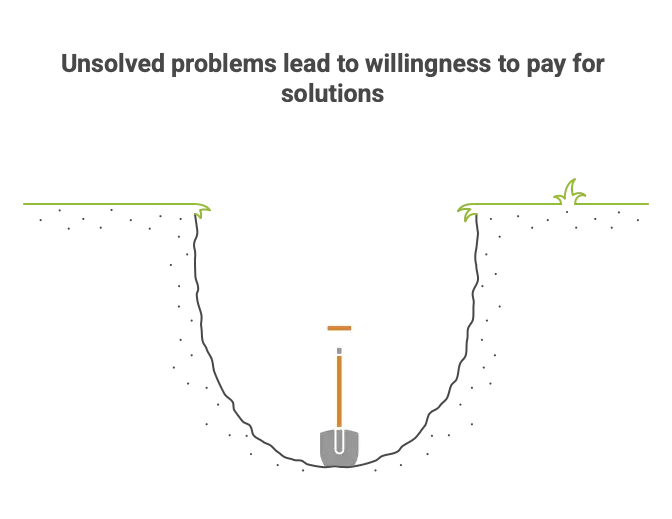
Unsolved problems lead to willingness to pay for solutions
Step 3: Sell Before You Build (Within 7 Days)
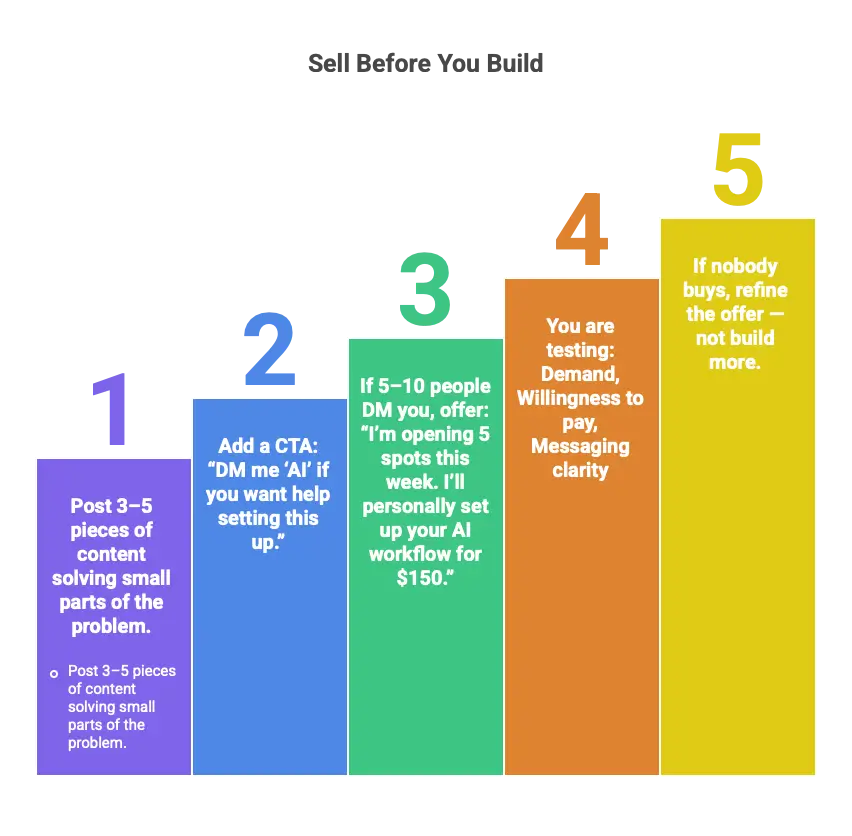
Do NOT build a course.
Instead:
- Post 3 - 5 pieces of content solving small parts of the problem.
- Add a CTA:
“DM me ‘AI’ if you want help setting this up.”
If 5 - 10 people DM you, offer:
“I’m opening 5 spots this week. I’ll personally set up your AI workflow for $150.”
You are testing:
• Demand
• Willingness to pay
• Messaging clarity
If nobody buys, refine the offer - not build more.
Step 4: Use AI as Your Execution Engine
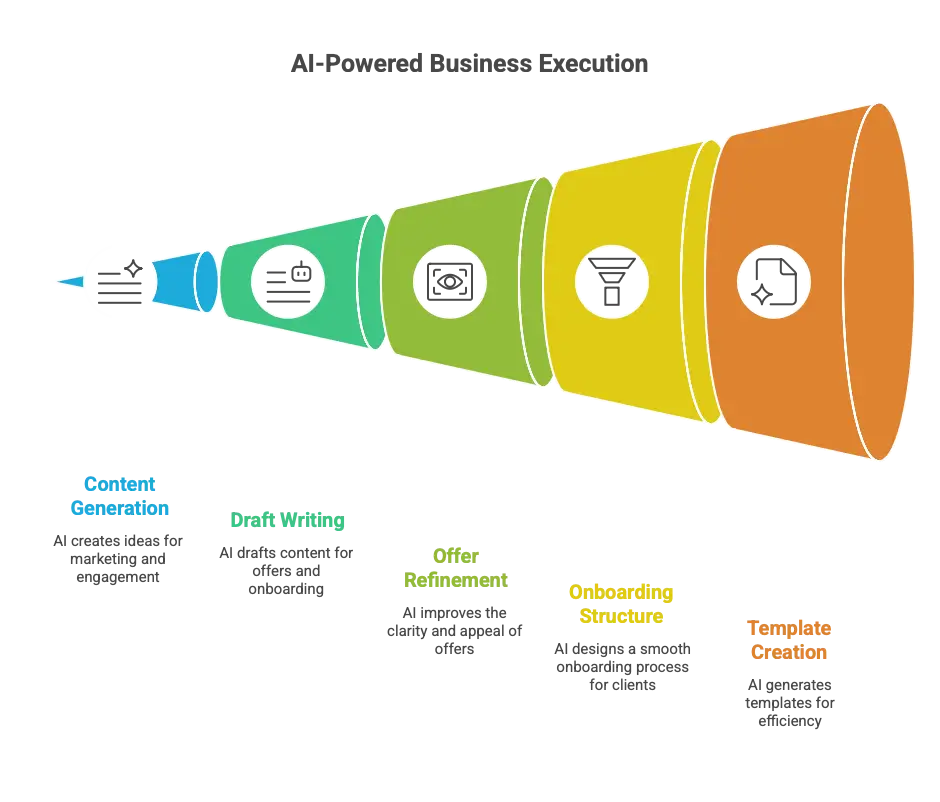
Operate like a team of 5.
Daily:
• Use AI to generate content ideas
• Use AI to write drafts
• Use AI to refine offers
• Use AI to structure onboarding
• Use AI to create templates
Example prompt:
“Act as a business strategist. Based on my niche (small business owners struggling with email writing), design a simple 3-step paid service offer.”
AI handles:
• Speed
• Structure
• Drafting
You handle:
• Judgment
• Relationship
• Decision making
Step 5: Build Audience While You Sell (Daily Execution)
Do not wait to be perfect.
Post daily short content:
Day 1: “3 mistakes people make using ChatGPT.”
Day 2: “This prompt writes professional emails in 10 seconds.”
Day 3: “Before vs After using AI.”
You only need:
• 10 - 20 warm followers
• 3 - 5 DMs
• 1 paying client
One client validates the model.
Action:
Commit to 30 days of posting.
No excuses.
No perfectionism.

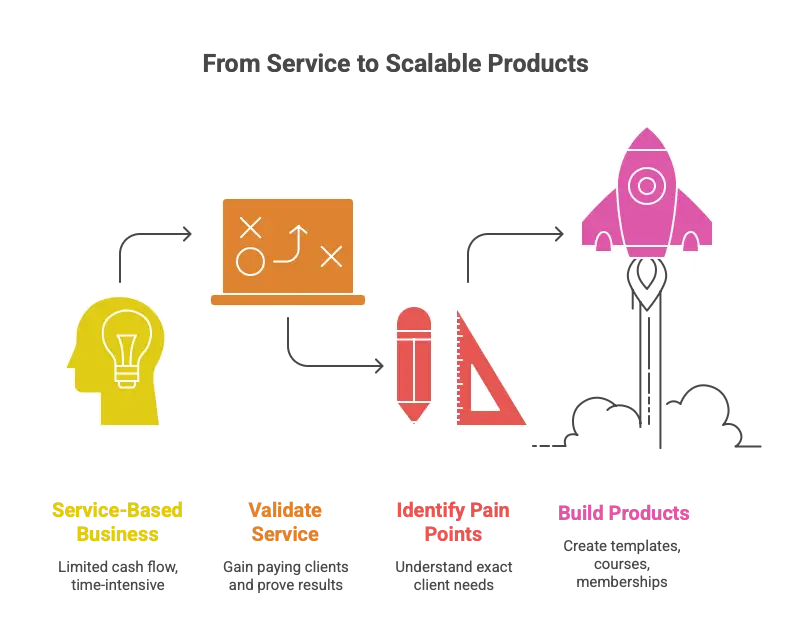
Step 6: Turn Service Into System (After 5 - 10 Clients)
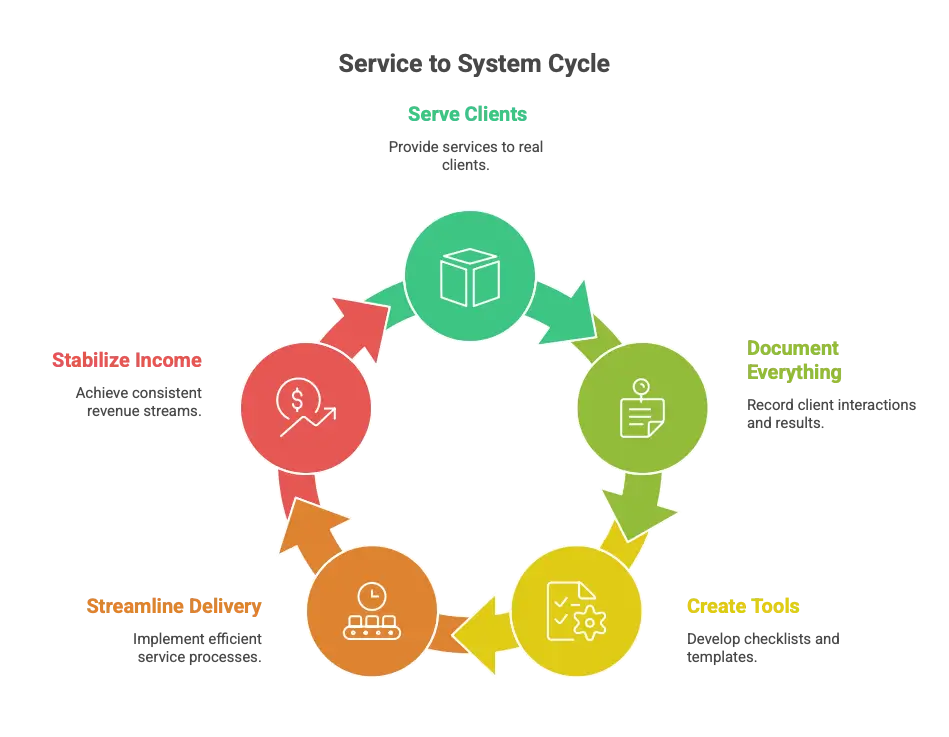
Once you serve real clients:
Document everything.
• What questions repeat?
• What results matter most?
• What steps are identical every time?
Create:
• A checklist
• A template library
• A repeatable onboarding message
Now delivery becomes faster.
Income becomes more stable.
Step 7: Productize and Scale
Only after:
✔ You have paying clients
✔ You know exact pain points
✔ You’ve proven results
Now build:
• A template bundle
• A mini course
• A membership
• A digital toolkit
Service = cash flow
Products = scale
Skipping service is why most people fail.
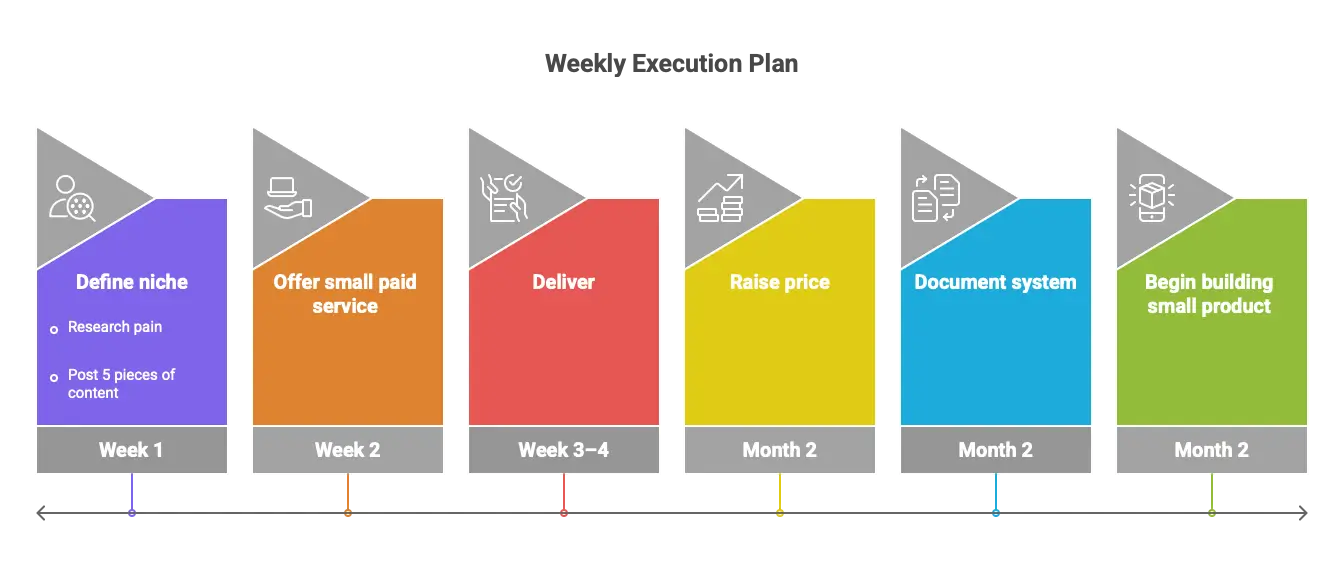
Weekly Execution Plan
Week 1:
• Define niche
• Research pain
• Post 5 pieces of content
Week 2:
• Offer small paid service
• Close first client
Week 3 - 4:
• Deliver
• Collect feedback
• Improve positioning
Month 2:
• Raise price
• Document system
• Begin building small product
The Truth About 2026
Leverage beats labor.
Speed beats perfection.
Clarity beats motivation.
The fastest way to build a one-person business is not to dream big.
It’s to:
Solve one painful problem.
For one specific group.
With one clear offer.
And execute daily.
If you had to start today with zero team -
what problem would you choose to solve?
